Emergencies & Hazardous Trees
Emergencies: storm damage and fallen trees
Storms, high winds, and falling limbs can create danger with little to no warning. We provide emergency tree services to safely handle downed trees or broken branches, and we're licensed, bonded, and insured to hopefully ease your mind in this stressful time.
Contact us for a consult and estimate:
We always prioritize emergencies. For the fastest response, call or text (206) 750-5085 to speak with the owner. You may also use our contact form or email support@bnbtrees.com as these are monitored by multiple people.
We respond quickly to:
Trees fallen on homes, garages, or vehicles
Broken limbs hanging over your home or walkways
Trees blocking driveways or access roads
Storm damaged trees that are creating new risks
Safety and urgency:
Our team prioritizes safety. With careful planning and professional equipment, we work efficiently to re-stabilize your environment and prevent further damage. Some jobs are more complex or hazardous, but every emergency is treated with respect. We're always willing to explain the details so that you can be confident in protecting your home and getting things back to normal.
Hazardous Trees
What counts as a hazard?
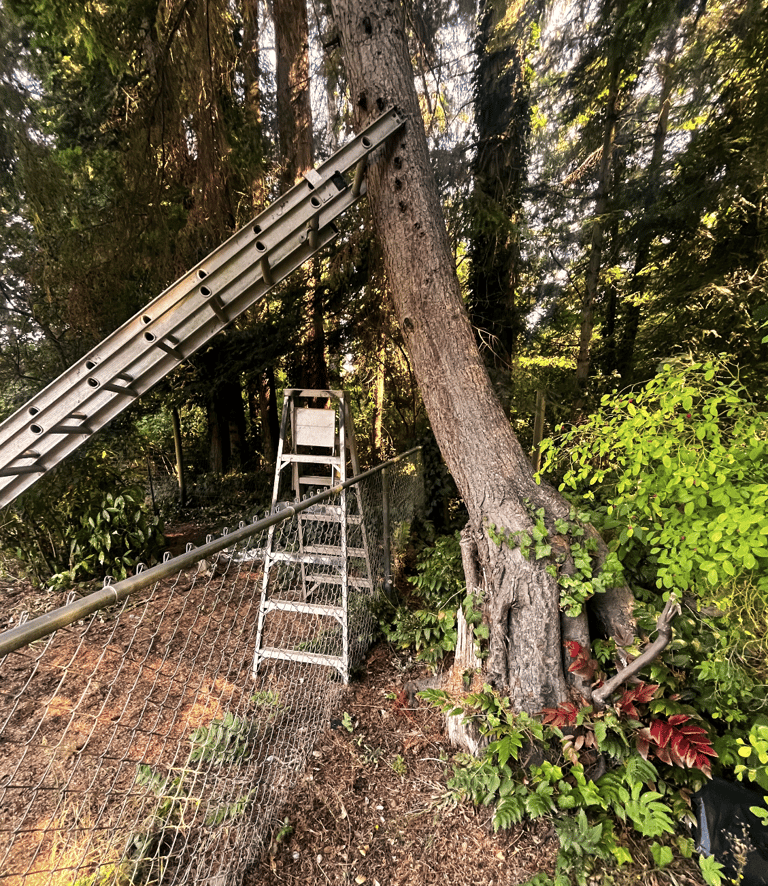
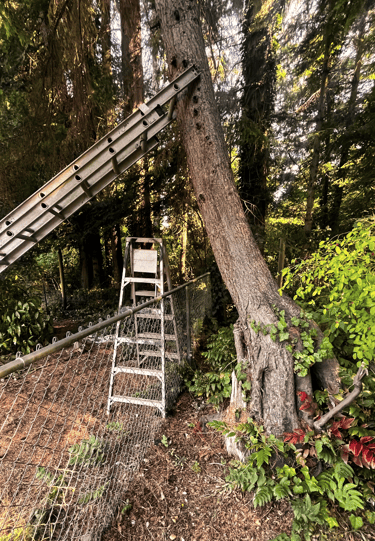
A hazardous tree removal may not always be an emergency, for instance if a tree is decaying but is in a large wooded part of your property, where it doesn't pose a threat to you or your home. On the other hand, a tree might be stable but the removal is hazardous because of its position or proximity to your house. You may also have suspended branches (widow makers) that require removal, but if they are far from your house and walkways it may not be an emergency.
At B&B Trees LLC, we specialize in tree removals that require careful rigging and controlled landing. We'll assess your tree and surroundings and give the situation the respect it deserves.
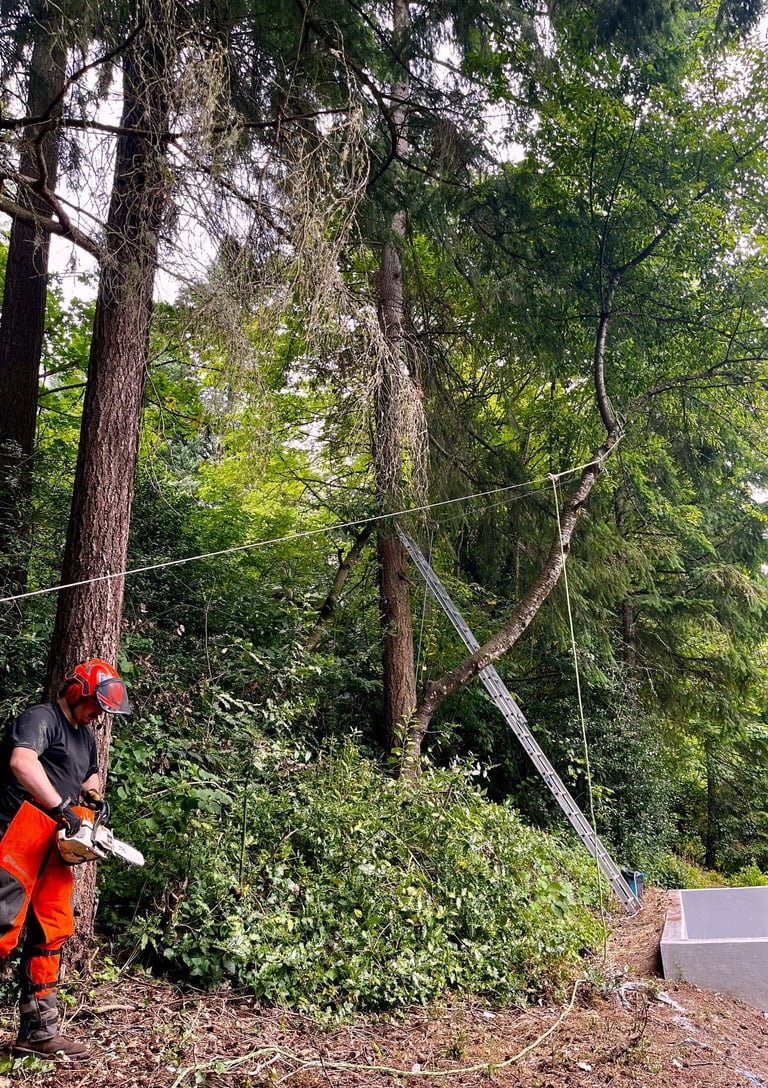
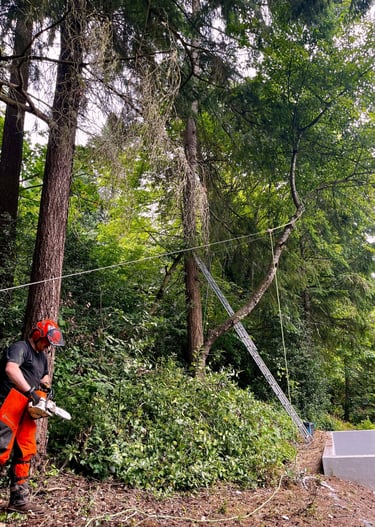
Trees may be called hazardous if they are leaning, decaying, or diseased. These require even more care than a typical tree removal, as the weight distribution is different and the tree or its branches may break apart easily.
Frequently asked questions
What will my insurance company need to reimburse me for emergency tree work?
You should always contact your insurance company directly for instructions, but the most common requirements are pictures, a professional assessment, and an invoice. Take pictures of the damage as soon as it's safe to do so, without getting too close to the hazard. We can also take pictures for you during the consult, as we're able to assess where the danger zones are. We're happy to provide detailed estimates and invoices so that you can submit them to your insurance company.
In an emergency, restoring safety to your home is always the priority. Some jurisdictions request that you submit pictures of the situation to issue a retroactive permit. The situation is also different for an active emergency compared to a tree that's diseased and hazardous, but still standing for now. We are happy to help you navigate to the proper city or county department, or determine if the work needs to happen first to ensure safety.
My tree is dying anyway, am I allowed to just take it down?
Depending on your jurisdiction, you may still need to submit paperwork. Many jurisdictions have different rules for non-emergency hazardous trees, and will still request a permit application. This is often to ensure that the tree is actually diseased or dying, or to ensure that a safe and qualified company performs the work since it can be more dangerous than a typical tree removal.
Do I really need to worry about a permit when it's a hazardous tree?
Tree Service Areas
Mukilteo
Marysville
Everett
Lake Stevens
Unincorporated Snohomish County
Unincorporated King County
Email support@bnbtrees.com
Visit or Leave Feedback
Phone (206) 750-5085
Contact
NextDoor
Address Bothell, WA 98021